Is It Ok for Babies to Cry Themselves to Sleep
Slumber Myth 1: Later to bed = Baby sleeps later in the morning
Sleeping in—it'south wishful thinking for many parents. Actually, the thought that babies will slumber afterward if put to bed later is a mutual myth. Babies slumber better, longer, and cry less if they are put to bed early in the evening. Babies who get to sleep late in the evening are often "over tired", even though they seem to have free energy.
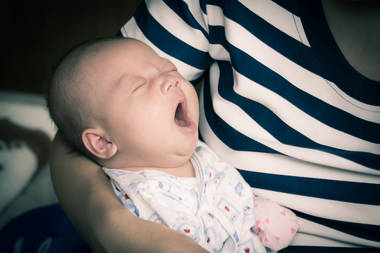
Look for your baby's "sleep signals" that show when she is tired. Seize the moment earlier the "sleepy window" has passed. The first signs of tiredness—eye rubbing, yawning, slowing down—should point a transition to the bedtime routine. This may occur every bit early as half dozen:00 or seven:00 pm for babies.
Sleep Myth 2: Babies should slumber through the night
Many parents dream of nothing more than getting their baby to sleep through the night. Most babies have the capacity to brand it viii hours or more without a feeding when they are most 4 months and at least sixteen pounds. If babies at this age and stage are still waking upwardly in the centre of the dark, the problem is usually non the waking up…it's the getting back to sleep.

Most babies (and adults) wake upward one or more times during the night. As adults, we normally just whorl over and go back to sleep. Babies typically wake 2 to 4 times a night. But while some babies weep briefly and then soothe themselves back to sleep, others don't. They have not yet learned how to get themselves back to slumber, and then they cry out for assist.
The key is helping your baby learn how to get herself to sleep. Creating a soothing routine of lullabies, books, and rocking before bedtime is very important. Then put your baby down in her crib while she's still awake. This gives her the chance to larn what it feels like to fall asleep on her own.
If your child is over ane twelvemonth of historic period, consider offering him a "lovey" (stuffed beast or special blanket). Babies will often comfort themselves with these objects, which helps them fall comatose. You may also hear your babe singing or talking to herself before drifting off to sleep. These are all ways babies accept of putting themselves to sleep.
Sleep Myth three: "Crying It Out" is bad for baby
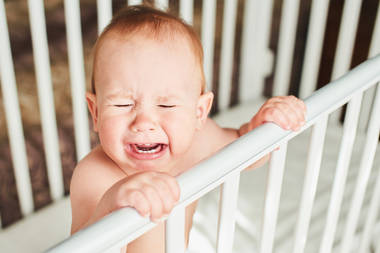
Crying is a common and (understandable!) response to proverb practiced-bye to a loved parent at bedtime. Even so, learning to fall asleep on one's own is an important skill that yous can assist your babe learn when she is old enough—at about 4 months.
Most experts and inquiry agree that letting a infant or toddler weep as they get to sleep will not have any long-term damaging effects. A child who is well-loved, nurtured, and responded to during the day will not exist hurt by fussing a bit before bed in the evening. And the practiced news is that the crying at bedtime will probably but continue for a few days before your baby adapts and begins to larn how to put herself to sleep.
But that doesn't mean it'south an easy choice for parents. Many parenting decisions, and especially this ane, involve understanding temperament—not merely your baby's, but your ain as well. If letting your baby cry herself to sleep is too emotionally painful for you, at that place are other options. For case, you can go back to check on her every 10 minutes (simply without rocking or nursing her). Or, you lot tin can decide on a certain length of crying that y'all are willing to put up with (say 15 minutes) and if the crying goes across that, you will go in to comfort the baby. Some other option, if your partner is able to suffer more of the crying, is that he or she takes on the bedtime routine. In any case, it is of import for the two of you to be in agreement virtually your bedtime plan. Finding an arroyo that works for both your babe and your family is important.
Sleep Myth iv: Babies on solid foods slumber longer

Many parents have heard that starting solids early (earlier four-half-dozen months) or adding cereal to their baby's bottle will assist their child slumber through the night. This is a myth. In that location is no research to support it, and in fact, the American Academy of Pediatrics discourages feeding babies solid foods before four months of age. This is due to their immature digestive systems and their lack of oral-motor skills. Some studies even indicate that early introduction of solids can trigger food allergies.
It is normal and expected that babies younger than 4 months will wake during the night. Get-go at about 4 months, you can first helping your baby learn to sleep though the dark. (Encounter to a higher place on how to teach your baby to autumn comatose on his own.)
Until then, your young infant volition exist enough full on a liquid (breastmilk or formula) diet, without using solids. Make the baby's last feeding part of his bedtime routine. And try to put your babe down while he is still awake, only drowsy. If you have concerns almost your kid'southward weight gain or sleep patterns, talk to your health care provider.
Source: https://www.zerotothree.org/resources/1082-common-myths-about-baby-sleep-challenges
0 Response to "Is It Ok for Babies to Cry Themselves to Sleep"
Post a Comment